External aerodynamics
Settle the dragbefore the wind tunnel.
Cars, trains and buildings: drag, lift, wakes and wind loads. Bring the Ansys Fluent mesh and solve on GPUs, with every GPU in the machine on one licence.
Free for any physics we sell.
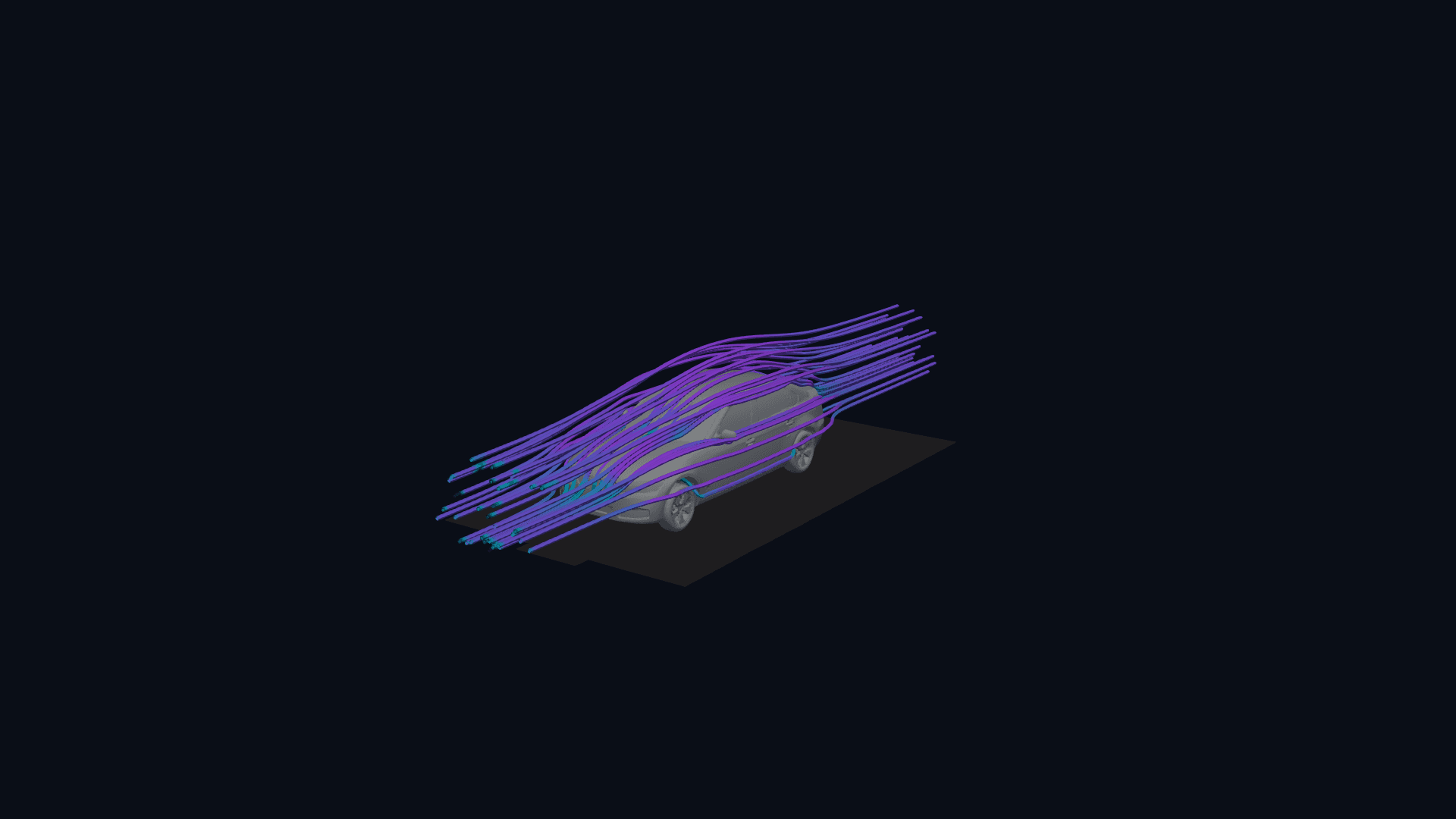
DrivAer
Production-shape passenger car, external flow. The picture is the wake, not a drag coefficient.
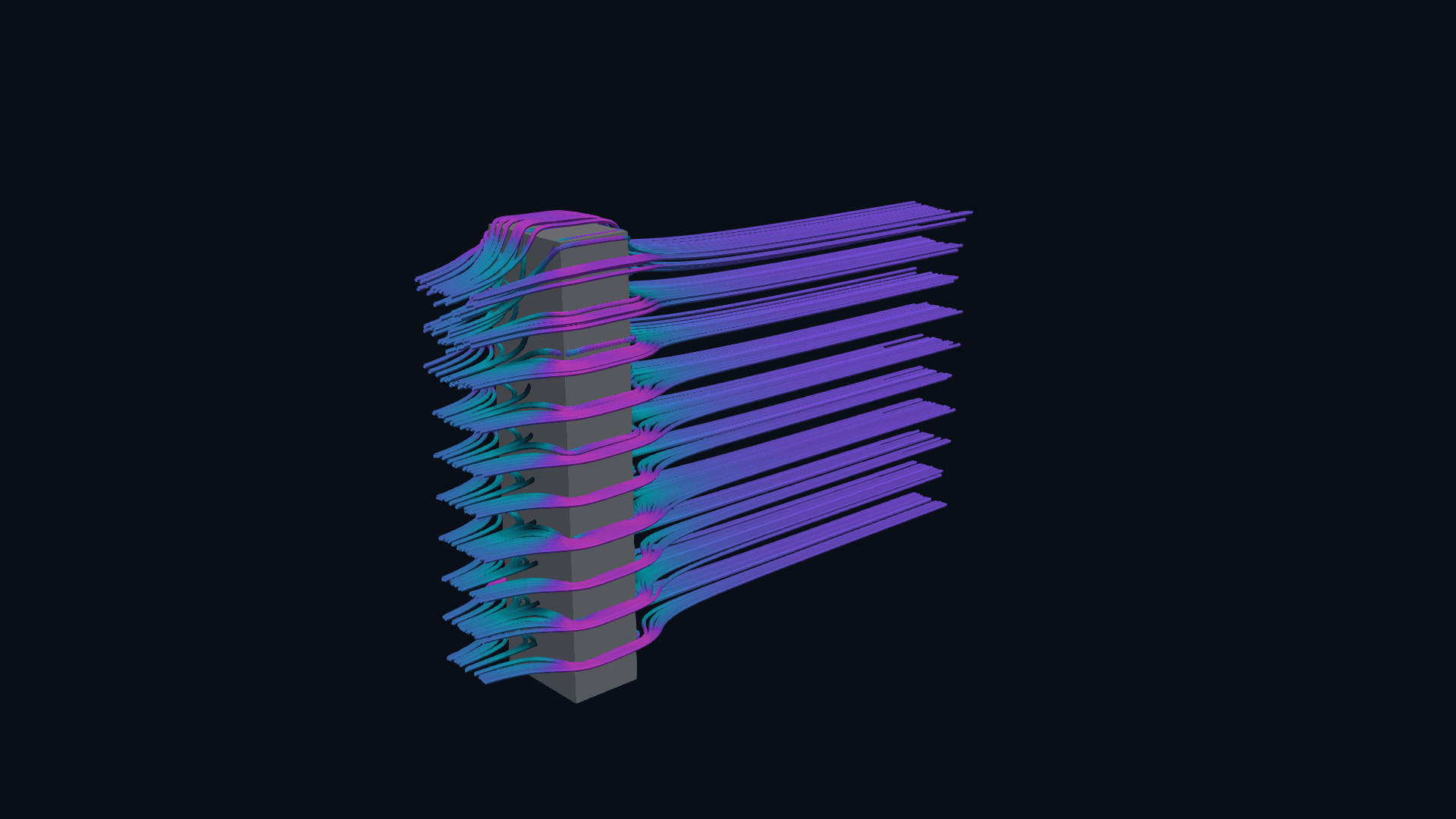
CAARC tall building
Canonical high-rise in an atmospheric boundary layer. Side-face shedding, not a pretty render.
What it solves
Cars and components
Drag, lift, wake and surface pressure. Wheels and other moving parts on a dynamic or overset mesh.
Trains and rail vehicles
Drag and pressure on the lead and tail cars, and aerodynamic loads in a crosswind.
Buildings and wind engineering
Wind loads, facade pressure and vortex shedding in the atmospheric boundary layer.
Aerofoils and wings
Lift, drag and pressure distribution. NACA 0012 checked against NASA's published reference data.
High-speed compressible flow
Transonic and supersonic external flow and shocks, with the Comp add-on.
From mesh to drag
- 01
Bring the mesh
.msh, .cas and .cas.h5 from Ansys Fluent convert with the boundary conditions. CGNS meshes read too (experimental).
- 02
Pick the turbulence model
RANS (SA, SST, k-ε), LES or DES. Steady or transient.
- 03
Solve on GPUs
TesboFlow Turb. Every GPU in the machine on one licence, no per-card charge.
- 04
Read the results
Drag, lift and other integrated quantities, plus field files that open in ParaView and other standard tools.
Verified cases
Each check says what it was compared against. Where a number is published it is here; where it is not, only the comparison is named.
Against the wind tunnel
Ahmed body 25°, 1.09M cells: drag coefficient
0.2964, inside the 0.285–0.299 tunnel band (Ahmed et al. 1984; Meile et al. 2011)
Against an independent CPU solver on the same mesh
The same drag coefficient
0.2964 vs 0.297 (−0.2%)
Against oblique-shock theory
15° wedge at Mach 5: shock angle and pressure jump
within 0.08° and 0.05%
Against published data
NACA 0012 aerofoil, against the NASA Turbulence Modeling Resource (TMR)
Against an independent CPU solver, field by field
Turbulence models: SA, SST, k-ε
Typical time and cost
Time
Ahmed body 25°, 8.17M cells, steady RANS: 94 ms per step on one H200; a CPU solver on the same mesh takes 11.4 s per step on 18 Xeon E5-2686 v4 cores. Over 1,000 steps that is about 1.6 minutes against 3.2 hours.
Per-step times measured in September 2026, multiplied by 1,000. This is not a time to convergence, and the GPUs and the CPU are not always on the same machine. Typical, not a contract: a free run measures your case on your mesh.
Licence
External aerodynamics starts at Turb; add Comp for transonic and supersonic flow. List prices; the contract follows the quote.
Turb
Recommended$66,000
¥480,000/ year
External flow around cars, trains and buildings: dynamic mesh, RANS, LES and DES. Every GPU on that machine, no per-card charge. One day on site included.
Request a quoteTurb + Comp
$88,000
¥640,000/ year
Transonic and supersonic aerodynamics. Nozzles. Shocks.
Request a quoteOr we run it for you
Standard job
$11,000
¥80,000per job
You supply the mesh and the boundary list. One condition: agreed forces or pressure drop, field files and a one-page PDF. Anything TesboFlow supports today is in scope, at the mesh size your case needs.
Same mesh, changed boundaries or operating point: $4,000. You do not need a licence. The solver stays with us.
Request a quoteSend us the case you cannot get tunnel time for.
Free for any physics we sell.